Gran Turismo 7 System Requirements and Gear Guide
Understanding the gran turismo 7 system requirements is the first step for any racing enthusiast looking to experience the pinnacle of driving simulation. Whether you are a veteran of the series or a newcomer eager to burn rubber, knowing exactly what hardware you need ensures that your race day is free from technical hiccups. The term gran turismo 7 system requirements might traditionally apply to PC gaming, but in the world of Polyphony Digital, it signifies understanding the distinct capabilities between the PlayStation 4 and PlayStation 5 consoles. The desire for a hyper-realistic driving experience drives many to question if their current setup can handle the ray-tracing reflections and high-fidelity audio that define this masterpiece. Furthermore, with rumors constantly swirling about a potential PC port, clarifying the current landscape is essential for making an informed purchasing decision.
The leap in performance offered by the latest hardware transforms Gran Turismo 7 from a simple game into a breathtaking simulation. While the core gameplay remains accessible across generations, the “requirements” for the definitive experience involve more than just the console; they encompass storage space, display capabilities, and input devices. Navigating the nuances of storage management is particularly crucial, as the game demands a significant amount of drive space for its high-resolution assets and continuous updates. Additionally, for those wondering is gran turismo 7 more realistic than forza, the answer often lies in the precision of the physics engine and the hardware used to control it. By ensuring your setup meets the optimal standards, you unlock the full potential of every car and track, making every lap feel like a true battle against the laws of physics. Let us dive deep into the specifications and gear that will place you in pole position.
- Comparison of Gran Turismo 7 performance and storage needs on PS4 versus PS5.
- Clarification on the split-screen capabilities and multiplayer modes for local play.
- Analysis of the realism and physics compared to rival franchises like Forza.
- Top recommended hardware to meet and exceed the optimal racing standards.
Decoding the Specs: Console Performance and Limitations
- PlayStation 5 vs PlayStation 4 Performance Matrix
- Storage Realities and Installation Requirements
- The Truth About PC Ports and System Compatibility
- Split-Screen and Local Multiplayer Configuration
- Visual Fidelity and Ray Tracing Implementation
1. PlayStation 5 vs PlayStation 4 Performance Matrix
When discussing the gran turismo 7 system requirements, the conversation fundamentally revolves around the differences between the two supported consoles. The PlayStation 5 is the target platform, offering a target of 60 frames per second at 4K resolution, which provides the fluidity necessary for high-speed racing. In contrast, the PlayStation 4 version pushes the older hardware to its absolute limits, often requiring longer load times and sacrificing some visual sharpness. For competitive racers, the PS5’s almost instant loading speeds are a game-changer, allowing for rapid retries and seamless menu navigation that keeps the focus entirely on the driving.
To help you visualize the trade-offs, here is a comparison of the operational specifications across platforms:
| Feature | PlayStation 5 | PlayStation 4 Pro | PlayStation 4 |
|---|---|---|---|
| Resolution Target | Native 4K | Checkerboard 4K | 1080p |
| Frame Rate | 60 FPS | 60 FPS (mostly) | 60 FPS (variable) |
| Ray Tracing | Supported (Replays/Scapes) | Not Supported | Not Supported |
| Loading Times | Ultra-Fast (SSD) | Standard (HDD) | Standard (HDD) |
| Haptic Feedback | DualSense Support | Standard Rumble | Standard Rumble |
The “system requirements” for the PS5 version effectively include a 4K HDR television to appreciate the graphical fidelity fully. Ray tracing, a feature often sought after in modern gaming, is available on PS5 but is restricted to specific modes like Replays, Scapes (photo mode), and garage viewing to maintain a steady 60fps during actual gameplay. This strategic choice ensures that the racing experience remains smooth and responsive, which is critical for hitting apexes with precision. On the PS4, while the game looks impressive, the lack of ray tracing and slower load times are the compromises made for compatibility.
Furthermore, the DualSense controller on the PS5 adds a layer of physical requirements to the experience. The adaptive triggers communicate tire grip and brake resistance, providing tactile information that was previously only available through expensive force-feedback steering wheels. This means that to get the “intended” experience where you can feel the road surface through your hands, the PS5 system is not just recommended; it is the benchmark. Understanding these differences helps manage expectations and justifies the investment in the newer console for serious enthusiasts.
2. Storage Realities and Installation Requirements
One of the most critical aspects of the gran turismo 7 system requirements is the immense storage space required. Upon launch, the game demanded over 110 GB of free space, and with continuous content updates including new cars, tracks, and features, this number continues to grow. For users on the standard 500GB PS4 or the 825GB PS5, Gran Turismo 7 can easily consume more than 10-15% of the total available storage. It is essential to ensure you have ample room before attempting installation to avoid the frustration of deleting other games mid-download.
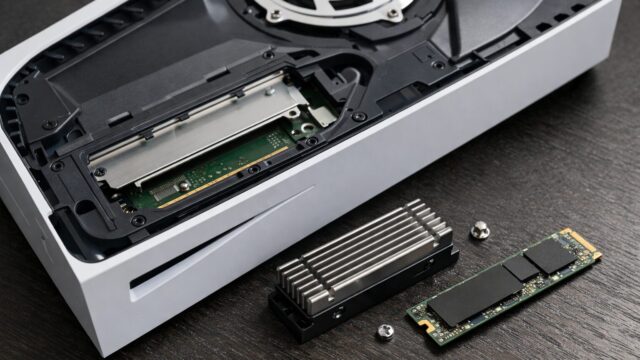
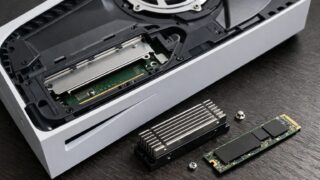
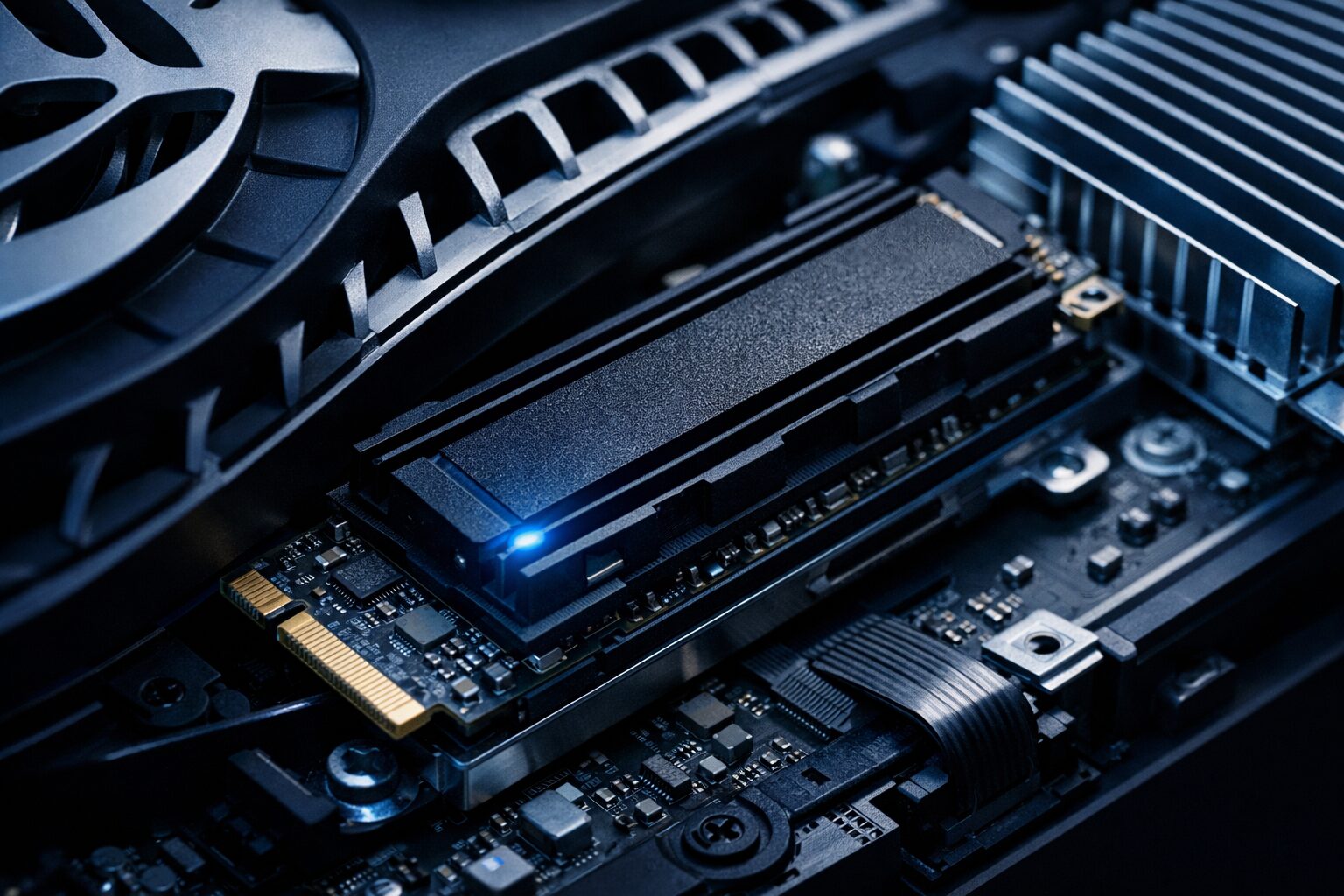
For PS5 users, this storage requirement highlights the potential need for an M.2 SSD expansion. While the game can be stored on an external USB drive, it must be run from the internal ultra-high-speed SSD to utilize the fast loading features. Managing your console’s storage is a modern system requirement in itself. We recommend keeping at least 150 GB free to accommodate the base game and future patches comfortably. This foresight prevents technical bottlenecks and ensures your game is always ready to launch when the urge to race strikes.
On the PS4, loading times are significantly impacted by the speed of the hard drive. While upgrading to an internal SSD on a PS4 Pro can alleviate some of the waiting, it will never match the throughput of the PS5’s custom architecture. The sheer volume of high-quality textures and audio data in Gran Turismo 7 pushes storage technology to the forefront of the user experience. Treating your storage capacity as a primary system spec is the best way to maintain a healthy and efficient gaming library.
3. The Truth About PC Ports and System Compatibility
A common query revolves around “Gran Turismo 7 PC Steam” and whether the game will migrate to personal computers. As of now, Gran Turismo 7 remains a PlayStation exclusive. Unlike other Sony titles that have eventually found their way to PC, Polyphony Digital has been protective of their flagship franchise. Therefore, there are no official PC system requirements. Any information suggesting otherwise is speculative. To play Gran Turismo 7 today, owning a PlayStation console is a strict hardware requirement.
However, the comparison to PC racing sims is inevitable. Many wonder “Is Gran Turismo 7 more realistic than Forza?” The answer lies in the design philosophy. Gran Turismo aims for a clinical, precise driving simulation that emphasizes car culture and history, often feeling more grounded than the open-world festival vibe of Forza Horizon. Against Forza Motorsport, GT7 holds its own with a unique physics model that prioritizes weight transfer and tire physics. The “system requirement” here is a mindset: a willingness to learn proper driving techniques rather than just flooring the accelerator.
While a PC port would theoretically open the game to higher frame rates and ultra-wide monitor support, the PS5 version is optimized to extract every ounce of power from the console. The closed ecosystem allows the developers to fine-tune performance without worrying about the infinite hardware combinations found in the PC market. For now, the best way to experience GT7 is to embrace the PlayStation ecosystem, which has been tailored specifically to deliver this automotive love letter.
4. Split-Screen and Local Multiplayer Configuration
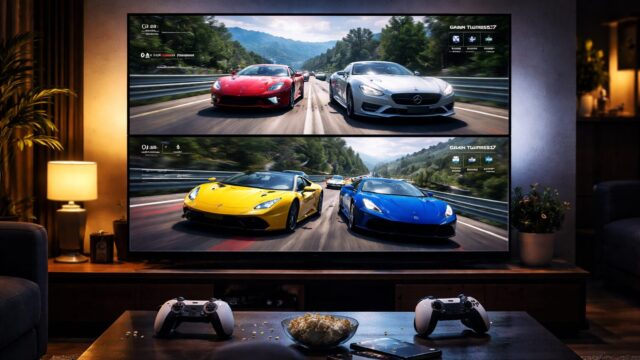
For those asking “Can I play GT7 split-screen?” or “Can two players play on the same PS5?”, the answer is yes. Gran Turismo 7 supports 2-player local split-screen multiplayer. This mode is a staple of the franchise, allowing friends to race head-to-head on the same couch. The system requirement for this is straightforward: you need two compatible controllers and a single console. However, it is worth noting that at launch, there were some limitations and bugs with assist settings in split-screen mode, though patches have largely addressed these issues to ensure a fair race.
The “Couch co-op” aspect is purely competitive; there is no cooperative campaign mode where two players progress through the career together. The split-screen mode divides the screen vertically or horizontally, depending on updates and settings, allowing each player to see their perspective. Running two simultaneous viewports requires significant processing power, which is why the visual fidelity might be slightly scaled back compared to single-player races to maintain a smooth frame rate. This is a standard trade-off in console gaming.
To access this mode, you typically need to unlock the Multiplayer pavilion within the World Map by progressing through the early stages of the Cafe campaign. This means the “requirement” to play multiplayer is not just hardware but also gameplay progression. You cannot simply boot up the game for the first time and immediately race a friend; you must first prove your competency as a driver. This progression ensures that both players have access to a variety of cars and tracks for their local battles.
5. Visual Fidelity and Ray Tracing Implementation
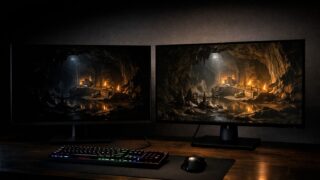
The visual system requirements for Gran Turismo 7 are defined by the display you use. To see the game as the developers intended, a 4K TV with HDR (High Dynamic Range) capability is essential. HDR allows for blindingly bright sunlight reflecting off a chrome bumper and deep, dark shadows in a tunnel, creating a contrast that mimics the human eye. Without an HDR display, the game still looks fantastic, but you miss out on the depth of color and lighting that defines the “next-gen” look.
Ray tracing is a demanding rendering technique that simulates the physical behavior of light. On the PS5, enabling ray tracing in the settings adds a layer of realism to replays and photography that is unrivaled. It calculates reflections in real-time, showing the environment and other cars mirrored on your vehicle’s bodywork. While this feature is disabled during high-speed gameplay to prioritize frame rate, its presence in other modes sets a high bar for visual quality. It demands a lot from the console’s GPU, showing why the PS5 is the preferred platform.
For PS4 users, the system uses traditional reflection mapping techniques. While effective, they lack the accuracy of ray tracing. If your priority is visual spectacle and photo-realism, the PS5 is the only option that meets those requirements. The game is designed to be a showcase for what the hardware can do, making the display device a critical component of the overall system equation.
Essential Gear to Meet Gran Turismo 7 Requirements
- PlayStation 5 Console (Disc or Digital Edition)
- WD_BLACK SN850P NVMe SSD for PS5 Consoles
- Logitech G923 Racing Wheel and Pedals
- PlayStation VR2 Headset
- Sony INZONE M9 Gaming Monitor
1. PlayStation 5 Console (Disc or Digital Edition)
The PlayStation 5 Console is the fundamental system requirement to experience Gran Turismo 7 in its full glory. It is the engine that powers the 4K visuals, the 60fps frame rates, and the lightning-fast load times that define the modern racing experience. The custom SSD architecture eliminates the long waits between races, keeping you in the zone and on the track. The console’s processing power enables complex physics calculations for tire simulation and aerodynamics, providing a driving feel that is incredibly nuanced and realistic compared to previous generations.
Owning a PS5 also grants access to the DualSense controller’s haptic feedback and adaptive triggers. These features allow you to feel the texture of the road, the shift in weight during a corner, and the locking of brakes through your fingertips. This tactile information is crucial for shaving seconds off your lap time. Whether you choose the Disc Edition to play physical media or the Digital Edition for a streamlined setup, the PS5 is the non-negotiable heart of your Gran Turismo 7 setup. It transforms the game from a visual treat into a sensory experience.
2. WD_BLACK SN850P NVMe SSD for PS5 Consoles
Meeting the storage requirement of Gran Turismo 7 is a challenge, but the WD_BLACK SN850P NVMe SSD is the ultimate solution. Officially licensed for the PlayStation 5, this drive expands your console’s storage capacity, allowing you to install GT7 and its massive updates without deleting other favorite games. With read speeds up to 7,300 MB/s, it matches the internal drive’s performance, ensuring that you do not sacrifice loading speeds for extra space. The integrated heatsink is designed specifically to fit into the PS5’s expansion slot, maintaining optimal temperatures during marathon gaming sessions.
Installing this SSD is a straightforward process that instantly upgrades your system’s capability. With GT7 occupying over 100GB, having an additional 1TB or 2TB of space gives you the freedom to maintain a vast library of titles. It eliminates the “storage anxiety” that comes with modern gaming. By investing in this high-performance storage, you ensure that your system is future-proofed against the ever-increasing size of game files. It is a practical and powerful addition that keeps your racing career uninterrupted and your console running at peak efficiency.
3. Logitech G923 Racing Wheel and Pedals
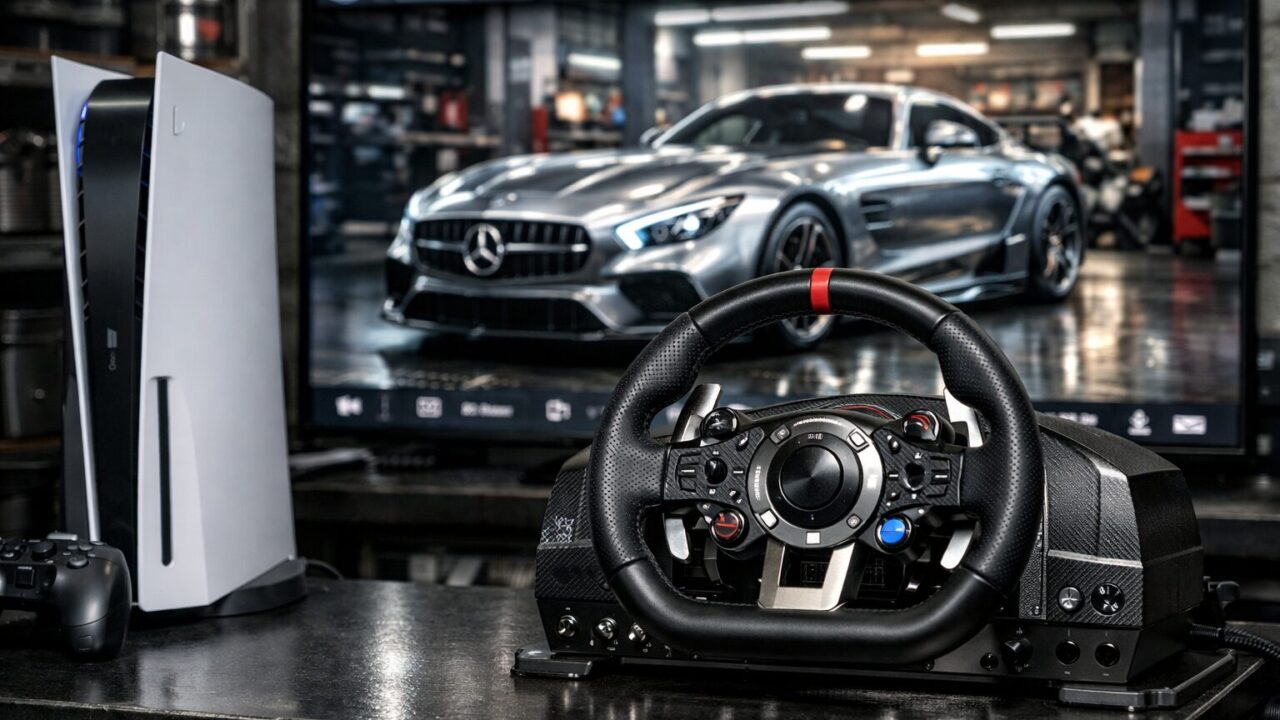
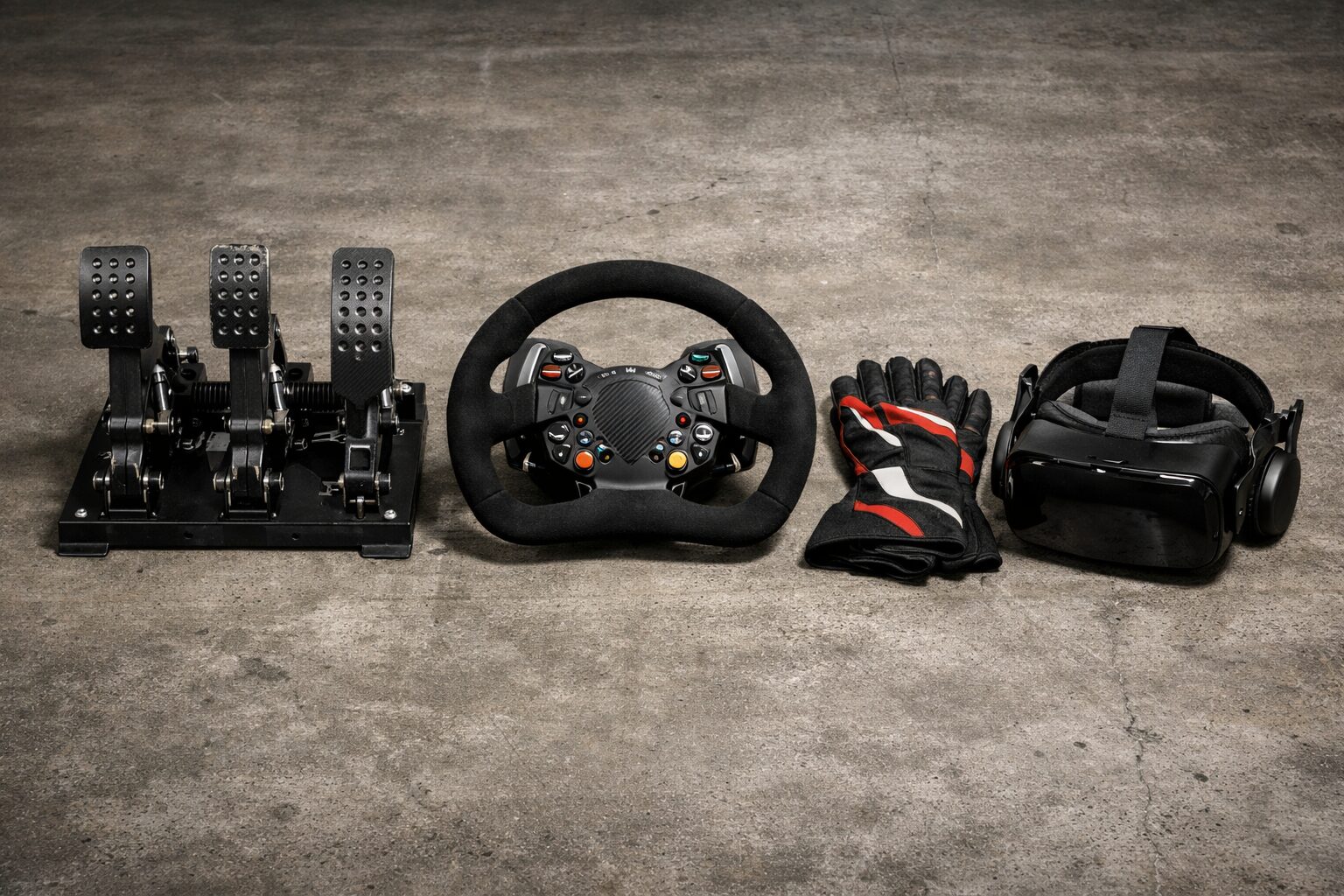
To meet the requirement for “true realism,” a controller often isn’t enough; you need the Logitech G923 Racing Wheel and Pedals. This wheel features TRUEFORCE technology, which connects directly to the game’s physics engine to deliver high-definition force feedback. You will feel the engine’s vibration, the subtle loss of traction, and the terrain changes with incredible detail. It bridges the gap between playing a game and driving a car. The premium materials, including a hand-stitched leather wheel cover and metal pedals, provide durability and a professional feel that withstands intense racing.
The G923 also includes a progressive brake pedal that mimics the feel of a pressure-sensitive brake system, allowing for precise trail braking into corners. Integrated RPM LEDs on the steering wheel help you hit perfect shifts without taking your eyes off the road. For anyone wondering if GT7 is more realistic than Forza, using this wheel demonstrates the depth of Polyphony Digital’s physics model. It transforms your desk or living room into a cockpit. If you are serious about improving your lap times and immersion, the Logitech G923 is the essential interface between you and the virtual asphalt.
4. PlayStation VR2 Headset
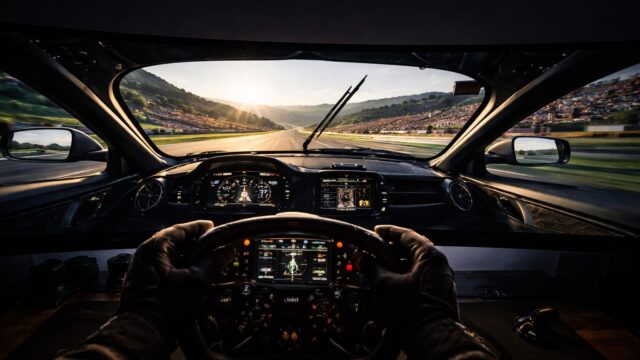
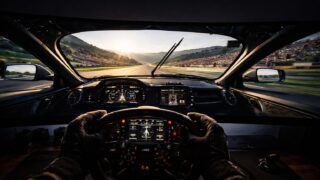
The PlayStation VR2 Headset represents the ultimate system requirement for immersion in Gran Turismo 7. The game is fully compatible with PSVR2, allowing you to sit inside the cockpit of every car in the game. The 4K HDR OLED displays provide crystal-clear visuals, while the 110-degree field of view allows you to look into corners and check your mirrors naturally by turning your head. This spatial awareness gives you a significant advantage in judging braking points and distances to other cars. It is not just a display; it is a teleportation device to the driver’s seat.
Foveated rendering technology uses eye-tracking to focus processing power exactly where you are looking, ensuring incredible graphical fidelity without dropping frames. The headset also provides subtle haptic feedback, simulating the sensation of objects passing by your head or the rumble of the car. For showroom viewing, it allows you to inspect every detail of the car’s interior and exterior as if you were standing right next to it. Racing in VR changes your perspective entirely, making the scale and speed of the cars feel terrifyingly real. It is the pinnacle of the Gran Turismo experience.
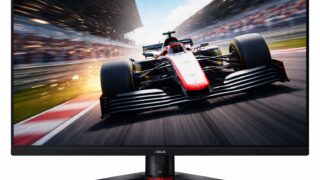
5. Sony INZONE M9 Gaming Monitor
To fulfill the visual system requirements of 4K and HDR, the Sony INZONE M9 Gaming Monitor is the perfect partner for your PS5 and GT7. This 27-inch monitor features Full Array Local Dimming, which delivers deep blacks and high brightness simultaneously, essential for rendering the high-contrast lighting of a race track. With a 144Hz refresh rate and HDMI 2.1 support, it is fully capable of displaying the smooth 60fps (and potentially 120fps in supported modes) output of the console. The sharp 4K resolution ensures that every decal on your car and every leaf on the trees is rendered with crisp detail.
The monitor is aesthetically designed to match the PS5, creating a cohesive and stylish setup. It also features Auto HDR Tone Mapping, which automatically optimizes HDR settings for the PS5, saving you from tedious calibration. This ensures you see the game exactly as the developers intended from the moment you plug it in. The fast 1ms response time minimizes ghosting and motion blur, keeping the fast-moving action clear. If you are playing at a desk, the INZONE M9 offers a premium visual window into the world of Gran Turismo that television sets often cannot match in responsiveness and pixel density.
Summary: Ready to Race?
 Meeting the gran turismo 7 system requirements is about more than just checking a box; it is about assembling the components for an unforgettable driving experience. We have explored the clear superiority of the PlayStation 5 in delivering 4K visuals, rapid loading, and ray-tracing features that the PS4 simply cannot match. While the game remains playable on the older generation, the “true” experience intended by the developers requires the power of the current-gen console. Additionally, we have dismantled the myths surrounding PC ports, confirming that a PlayStation console is currently the only gateway to this racing simulator.
The gear you choose defines the quality of your simulation. From the high-speed storage of the WD_BLACK SSD to the tactile precision of the Logitech G923 wheel and the immersive depth of the PSVR2, each piece of hardware plays a vital role. Racing is a sport of margins, and having the right setup gives you the edge you need to shave seconds off your lap times. Now is the time to assess your rig, clear your storage space, and ensure your display is up to the task. The track is waiting, the engines are idling, and the green light is about to flash. Equip yourself with the best, and drive like a champion.