The Absolute Best Webcam for Pokemon Cards
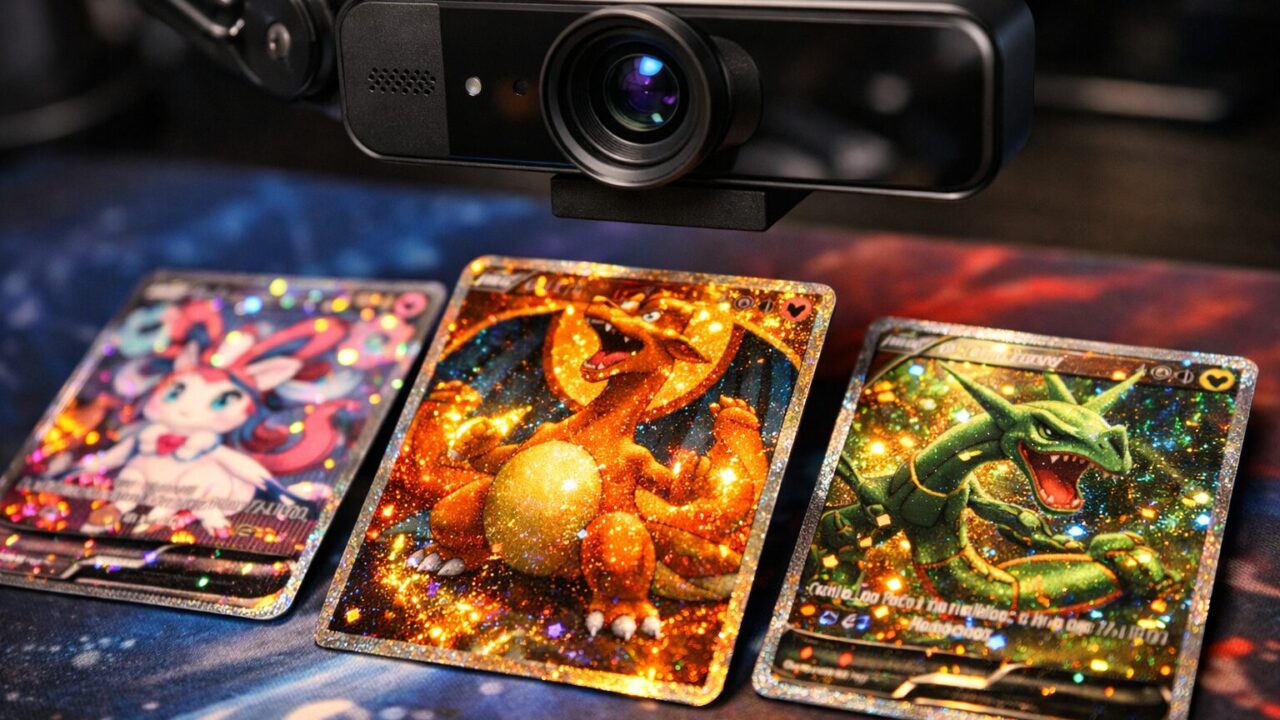
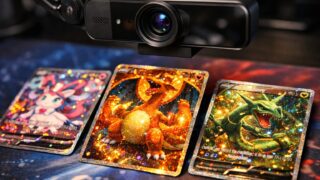
Finding the best webcam for pokemon cards is the defining factor between a blurry, amateur stream and a professional-grade TCG broadcast that captures every holographic detail. A high-quality best webcam for pokemon cards ensures that your viewers can read the fine print on a vintage Holo or appreciate the intricate texture of a modern Special Illustration Rare. When you are presenting a high-value card to your audience, you need equipment that handles reflective surfaces and shifting light without losing focus or blowing out the colors. This technical foundation is exactly how top-tier vendors and content creators build a reputation for quality and transparency in the competitive world of card collecting.
Professional collectors know that the lighting and lens quality of your setup will determine how much trust your buyers place in your listings on platforms like TCGplayer. While basic cameras struggle with macro focus, the right gear allows you to show off the centering and corner condition with microscopic clarity. This creates an immersive experience where the viewer feels like they are holding the card themselves, which is essential for growing a loyal community. Whether you are a dedicated pack opener or a professional vendor, your choice of optics serves as your primary bridge to the global market of collectors who demand visual perfection.
Investing in a premium visual setup pays dividends by reducing the need for constant color correction and manual refocusing during live sessions. High-end sensors are now capable of managing the tricky glints from foil cards while maintaining natural skin tones and background depth. This balance allows you to focus on the entertainment and the community interaction rather than fighting with your hardware. As we move into 2025, the standard for TCG content has reached a peak where only the most capable devices can satisfy the eagle-eyed expectations of the modern Pokemon card community.
- Comparison of high-resolution sensors tailored for macro card details.
- Analysis of autofocus reliability when switching between the host and the card.
- Evaluation of color accuracy for capturing authentic holographic shifts.
- Top recommended cameras for professional TCGplayer vendors and YouTubers in 2025.
Capturing Professional Quality TCG Content with Elite Gear
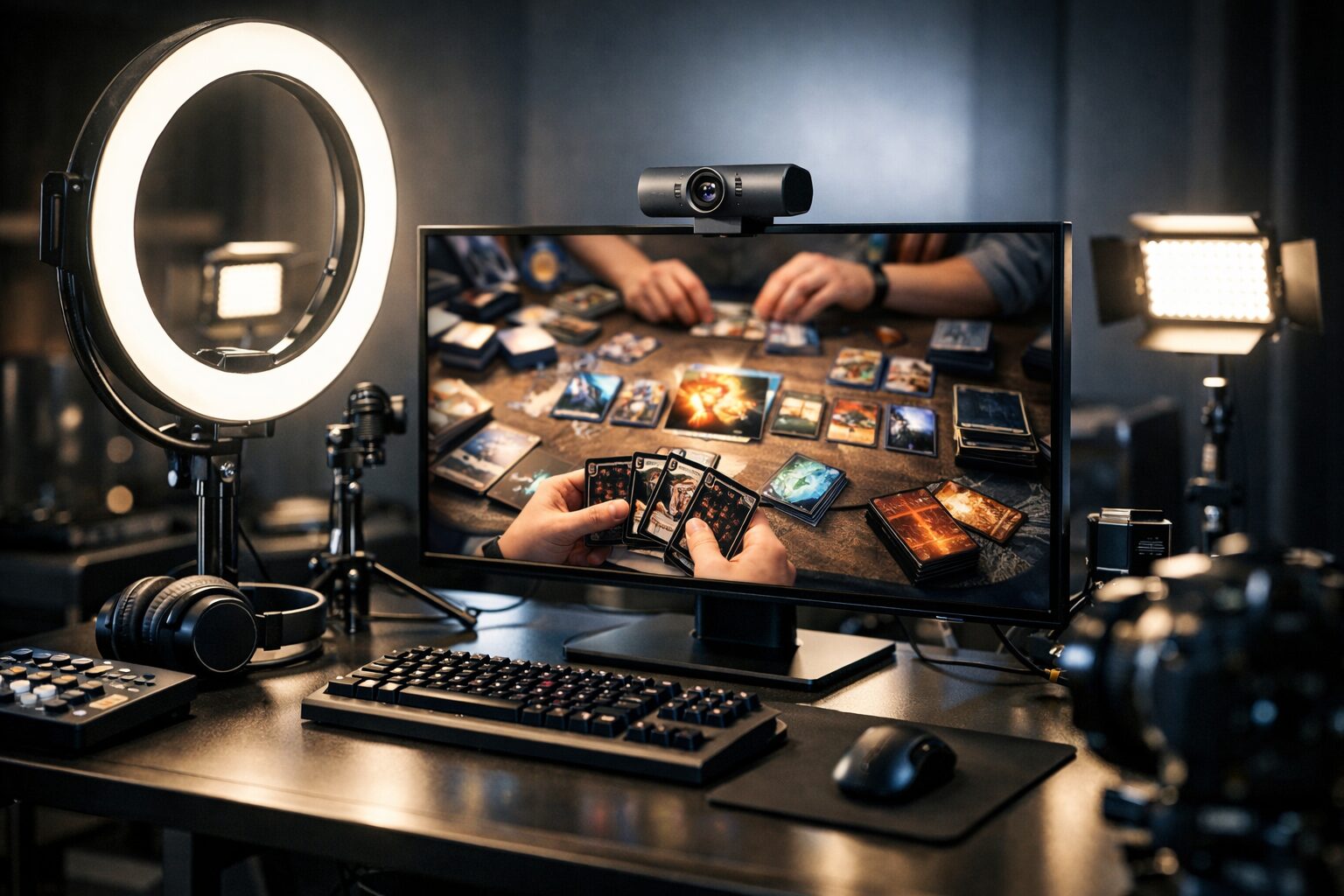
- Comparing TCG Camera Setup Performance Standards
- Autofocus and Lighting Realities for Card Openings
- Achieving Color Accuracy for Rare Holographic Cards
- Mounting Solutions and Top-Down View Optimization
- Future-Proofing Your Setup for 2025 Streaming Trends
1. Comparing TCG Camera Setup Performance Standards
When deciding on a best webcam for pokemon cards, you must look at how different categories of cameras handle the specific needs of a trading card setup. The table below outlines the core differences between standard webcams, specialized document cameras, and the high-end mirrorless setups often used by the most successful channels. While a standard webcam is convenient, it often lacks the sensor size needed to capture the nuance of a foil card. Mirrorless systems offer the best quality but require a significantly higher investment in lenses and capture cards to function as a webcam for live use.
| Feature | Standard 4K Webcam | AI Gimbal Webcam | Mirrorless (USB-C) |
|---|---|---|---|
| Sensor Size | 1/2.5 inch | 1/2 inch | 1.0 inch or APS-C |
| Autofocus Speed | Moderate | Very Fast (Phase Detect) | Instant (Eye-Tracking) |
| Macro Capability | Good | Excellent | Lens Dependent |
| Low Light Detail | Average | High | Professional Grade |
| Typical Price | 150 to 200 dollars | 250 to 300 dollars | 600 to 1,200 dollars |
While the higher-end mirrorless cameras provide the most beautiful bokeh and sharpness, modern 2025 webcams have closed the gap significantly. Advanced AI features now allow these smaller devices to track cards as they move into the frame, ensuring that the focus shifts naturally from the host face to the card surface. This is a major benefit for creators who work alone and cannot manually adjust settings during a live pack opening. The choice depends on your budget and whether you need a dedicated top-down camera or a versatile all-in-one solution for your desk.
A potential disadvantage of ultra-high-resolution setups is the sheer amount of data they require, which can stress your computer during long streaming sessions. However, the benefits of providing 4K clarity far outweigh the technical hurdles, as viewers increasingly watch content on high-resolution mobile devices and televisions. By investing in the right platform today, you gain the ability to crop into your footage without losing quality, which is perfect for creating short-form content for social media. This versatility is why high-sensor-size webcams remain the favorite choice for the majority of professional TCG content creators in 2025.
2. Autofocus and Lighting Realities for Card Openings
One of the most frustrating experiences for a viewer is watching a card opening where the camera constantly hunts for focus. The best webcam for pokemon cards must have a reliable autofocus system that can handle the transition between your hands and the card. Modern cameras use phase-detection or AI-driven tracking to lock onto the subject instantly, even when the card is tilted to catch the light. This ensures that the fine details of the card art are always sharp, allowing the audience to feel the same excitement as you do when you pull a rare hit.
Lighting is the second half of the equation when it comes to visual quality in the TCG space. Cards are inherently reflective, and a direct light source can create a harsh glare that obscures the artwork entirely. Professionals use softbox lights or ring lights positioned at an angle to create an even glow across the card surface. A high-quality webcam with HDR support can manage these highlights effectively, preserving the detail in the brightest spots while keeping the shadows clean. This balance is what makes a card look vibrant and expensive on screen rather than washed out and flat.
For those who frequently open packs on camera, the ability to lock focus is a critical feature that prevents the background from taking over. Many advanced webcams now offer software that allows you to set a focus range, ensuring that anything outside of your immediate hand area remains slightly blurred. This directs the viewer’s eye exactly where it needs to be: on the card. When your equipment works with you instead of against you, the quality of your content rises, and your ability to showcase the true condition of your collection becomes much more effective for professional listing and display.
3. Achieving Color Accuracy for Rare Holographic Cards
Color accuracy is the silent hero of successful card content because it defines how realistic the card appears to the viewer. If your camera skews too warm or too cool, a vibrant red Charizard might look orange, or a deep blue Umbreon might look dull. The best webcam for pokemon cards is one that captures the full spectrum of the holographic foil without oversaturating the image. This requires a high-quality glass lens and a sensor that can handle high bitrates, providing a rich and accurate color palette that mirrors what you see in real life.
Many top creators use specialized software to fine-tune their white balance before they start their session. This ensures that the white borders of the cards are perfectly neutral, which is the baseline for accurate color reproduction. When the white balance is correct, every other color falls into place, allowing the rainbow effects and metallic sheens of the cards to shine naturally. This level of professionalism is particularly important for vendors who are using their video as a proof of condition for high-value transactions where every pixel of color matters.
While software can help, there is no substitute for a sensor that natively understands light and color. Some of the latest 2025 webcams utilize Sony STARVIS sensors or similar technology that was originally designed for professional photography. These sensors are much better at distinguishing between subtle shades of color, which is vital for seeing the difference between a standard holo and a rare variant. By choosing a device with a focus on color fidelity, you ensure that your pulls always look their best, capturing the true essence of the card and providing a high-quality viewing experience for your community.
4. Mounting Solutions and Top-Down View Optimization
The perspective you choose for your card openings can dramatically change how your audience interacts with your content. A top-down view is the standard for the best webcam for pokemon cards because it provides a clear, unobstructed look at the playmat and the cards themselves. Achieving this requires a sturdy desk mount or a boom arm that can hold the camera securely without any shaking. Stability is key; even the best camera will produce unwatchable footage if it wobbles every time you touch the desk or move your hands to open a pack.
Optimization for this view involves more than just pointing the camera downward. You need to consider the distance between the lens and the mat to ensure you are utilizing the maximum resolution of the sensor. If the camera is too far away, you will lose detail when you crop in; if it is too close, you may run into focus issues or block your own workspace. Many modern webcams feature a wide field of view that can be adjusted via software, allowing you to find the perfect frame that captures both your hands and a generous portion of your playmat for a clean, professional look.
For those who want a more dynamic setup, using a secondary camera for your face while the main high-detail camera stays on the cards is a popular strategy. This multi-cam approach allows you to show your genuine reaction to a big pull while keeping the focus on the card’s beauty. Modern streaming software makes it easy to sync these feeds, and having a dedicated, high-quality top-down camera ensures that the primary focus of your channel remains the cards themselves. A well-mounted, stable camera is the foundation upon which a professional TCG channel is built, providing the consistency your viewers expect.
5. Future-Proofing Your Setup for 2025 Streaming Trends
The world of TCG content is evolving rapidly, with 4K streaming and high-bitrate video becoming the new baseline for top creators. Future-proofing your setup with the best webcam for pokemon cards means looking beyond basic 1080p resolutions and seeking out devices that offer superior dynamic range and processing power. As platforms like YouTube and Twitch continue to improve their infrastructure, having a camera that can output a high-quality 4K signal at 60 frames per second will keep you ahead of the curve. This ensures that your older videos will still look great years from now as display technology continues to advance.
In 2025, AI-assisted features are becoming more integrated into the streaming workflow. Cameras that can automatically adjust lighting based on the card you are holding or follow your movements without a cameraman are no longer futuristic concepts. These tools allow a solo creator to produce content that looks like it was made by a full production team. By choosing a camera with strong software support and frequent firmware updates, you ensure that your hardware grows along with the latest industry standards, providing you with new features and improvements long after your initial purchase.
Ultimately, the goal of any high-end camera setup is to remove the barriers between you and your audience. When your equipment is reliable and high-performing, you can put all your energy into your personality and your passion for the hobby. The investment in a professional camera is an investment in your future as a creator or vendor, providing you with the tools to compete at the highest level. The TCG community is one of the most passionate in the world, and they appreciate creators who take the time to present their favorite hobby with the visual respect it deserves. It is a strategic move for any serious collector in 2025.
Top 5 High-Definition Cameras for TCG Content Creators
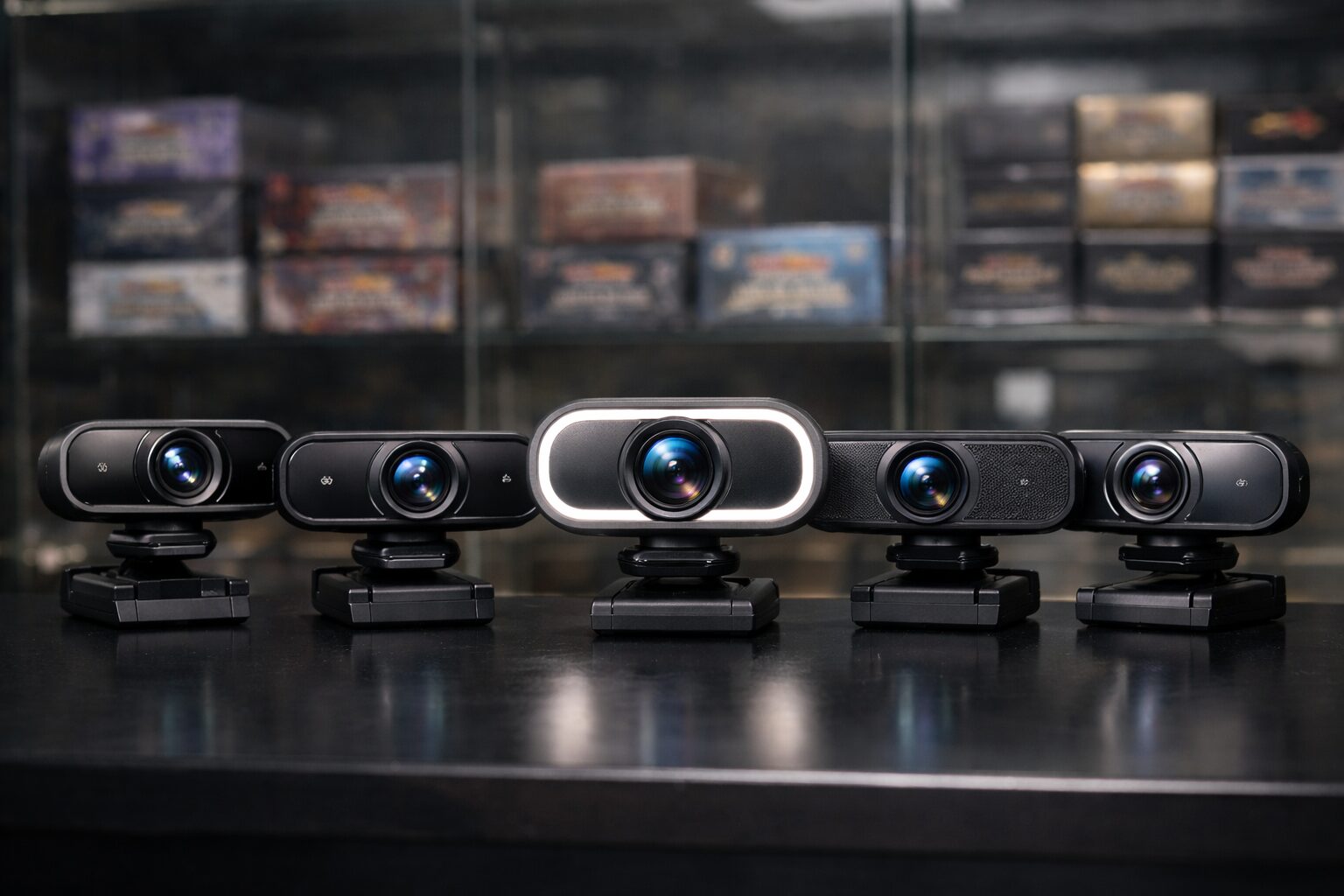
- Elgato Facecam MK.2 for Professional TCG Streaming
- Logitech MX Brio Ultra HD 4K for Desktop Card Opening
- Razer Kiyo Pro Ultra for High Detail Pack Openings
- Insta360 Link 2 with AI Tracking for TCG Setup
- Sony ZV-1 II for Professional TCG Camera Setup
1. Elgato Facecam MK.2 for Professional TCG Streaming
The Elgato Facecam MK.2 is a formidable upgrade that positions itself as a top contender for any professional TCG broadcast. It features a high-end Sony STARVIS sensor that excels in the indoor lighting conditions typical of most card rooms. This camera is specifically built for creators who want an uncompressed 1080p at 60 frames per second signal, which ensures that every movement of your hands is fluid and life-like. The glass lens is designed to reduce flare, which is a massive benefit when you are dealing with the reflective surfaces of holographic Pokemon cards.
What makes this device truly special for collectors is the Camera Hub software, which provides professional-level control over your image settings. You can manually lock the focus and adjust the ISO and shutter speed to perfectly capture the texture of a high-value card without any digital noise. It is built for endurance, handling hours of live streaming without overheating or losing signal quality. If you are serious about building a brand on YouTube or Twitch, this camera provides the reliability and visual punch that your audience will immediately recognize as top-tier. It is a solid choice that removes the guesswork from professional streaming.
2. Logitech MX Brio Ultra HD 4K for Desktop Card Opening
The Logitech MX Brio Ultra HD 4K is a masterpiece of modern webcam engineering, offering a massive leap in resolution and clarity for desktop users. It utilizes a 4K sensor that captures four times the detail of standard cameras, allowing your viewers to see the microscopic dust motes on a PSA 10 slab. The lens quality is exceptional, providing a sharp image from corner to corner which is vital when you are showing off the centering of a card. Its ability to maintain color accuracy in changing light makes it a favorite for those who record in rooms with natural sunlight.
This camera features a unique Show Mode that allows you to quickly tilt the camera down to show your desk, which is perfect for transitioning from a face-cam to a card-opening view. The built-in dual beamforming microphones ensure that your voice remains clear while you are narrating your pulls, though most professionals will still pair it with a dedicated mic. The MX Brio is designed for those who want a premium, high-resolution experience without the complexity of a mirrorless camera setup. It is a sleek, powerful, and incredibly capable device that will make your card collection look absolutely stunning to everyone watching.
3. Razer Kiyo Pro Ultra for High Detail Pack Openings
The Razer Kiyo Pro Ultra is essentially a DSLR sensor hidden inside a webcam body, offering the largest sensor ever put into this category of device. This massive Sony 1/1.2 inch STARVIS 2 sensor provides a natural background blur that makes your cards stand out with a professional, cinematic look. For TCG content, this means that the focus is razor-sharp on the card in your hand while the background remains softly out of focus, giving your videos an expensive feel. It handles the low light of a gaming den with ease, producing clean images where other cameras would show grain.
Razer has optimized this camera for gamers and creators who demand the highest level of detail in their streams. It supports raw 4K footage and has a specialized lens that mimics the performance of a professional photography lens. The autofocus is incredibly fast and intelligent, locking onto the face of a card the moment it enters the frame. If you want the absolute best image quality possible without moving into the world of expensive mirrorless cameras and capture cards, the Kiyo Pro Ultra is the definitive solution for 2025. It is a powerhouse that ensures your rarest pulls are seen in the best possible light.
4. Insta360 Link 2 with AI Tracking for TCG Setup
The Insta360 Link 2 is a revolutionary AI-powered gimbal camera that brings a new level of versatility to the TCG space. Its 1/2 inch sensor is capable of stunning 4K resolution, but its real power lies in its ability to move and track. This means you can set the camera to follow your hands as you move around your playmat, or use the specialized Whiteboard Mode to focus on specific areas of your desk. For card opening, the gimbal allows you to achieve perfect top-down angles without a bulky boom arm, as the camera can point itself directly down with ease.
This device is perfect for the solo creator who wants dynamic shots without needing a second person to operate the camera. The AI noise cancellation in the microphones and the advanced HDR mode ensure that your audio and video are always balanced, regardless of how chaotic your pack opening gets. It is incredibly compact and features a magnetic mount that allows it to be placed almost anywhere on your rig. The Insta360 Link 2 is the smartest camera on the market for 2025, offering a level of flexibility and intelligence that changes how you think about creating content for your card-playing community.
5. Sony ZV-1 II for Professional TCG Camera Setup
The Sony ZV-1 II is widely considered the gold standard for high-end vlogging and is frequently used by top TCG YouTubers like Deep Pocket Monster. While it is technically a standalone camera, its built-in UVC/UAC support allows it to function as a plug-and-play webcam via a single USB-C cable. The 1.0 inch sensor provides a level of detail and color depth that no traditional webcam can match, offering a truly professional look for your most important videos. Its wide-angle lens is perfect for capturing a full desktop setup while keeping every corner of the frame in sharp focus.
This camera features a specialized Product Showcase setting that is legendary in the TCG community. When you hold a card up to the lens, the camera instantly shifts focus to the card, and when you move it away, it snaps back to your face with incredible speed. This eliminates the need for manual focus adjustments and ensures that your viewers never miss a moment of the action. If your goal is to produce the highest quality content possible and you are willing to invest in professional-grade gear, the Sony ZV-1 II is the ultimate tool for capturing the beauty and value of your Pokemon card collection in 2025.
Summary: Mastering the Visuals of Your Pokemon Card Channel
 Selecting the best webcam for pokemon cards is an investment in the long-term success and professionalism of your presence in the TCG world. Throughout this guide, we have explored how high-quality optics, reliable autofocus, and accurate color reproduction can transform a simple video into a high-stakes viewing experience. Whether you are aiming for the high-end cinematic look of a mirrorless system or the streamlined convenience of a top-tier 4K webcam, the goal remains the same: to showcase your passion and your collection with the clarity it deserves. The market for Pokemon cards is more visual than ever, and your ability to present your pulls clearly is your greatest asset as a creator.
The transition from a basic setup to a professional one is a rewarding experience that pays off in viewer engagement and community trust. When your audience can see the texture of a card and the vibrant shifts of a holographic foil, they feel a deeper connection to your content. This transparency is also vital for those using their setup to sell cards, as a clear video is the best possible evidence of a card’s condition. By choosing one of the elite devices we have discussed, you are setting a standard of quality that will help you stand out in a crowded market and build a lasting reputation for excellence.
To truly master your visuals, we suggest taking a few specific steps to optimize your new equipment once it arrives. First, spend time setting up a consistent, soft light source that illuminates your workspace without creating direct glare on the card sleeves. Second, use the camera’s software to create a few presets for different types of content, such as a high-detail macro setting for card reveals and a wider setting for general chat. Finally, always do a quick test recording to check your white balance and focus speed before you go live or start a major recording session. These small habits ensure that your hardware always performs at its absolute peak.
We believe that the future of the TCG community is brighter than ever, and we are excited to see how you use these tools to share your love for Pokemon with the world. Whether you are hunting for a base set Charizard or opening the latest expansion, your visual presentation is the window through which your audience joins you on the ride. By prioritizing quality and choosing the right gear for your specific needs, you are creating a platform that is built to last. We hope this guide has provided you with the clarity needed to make an informed choice for your setup. Would you like me to help you design a lighting layout or a cable management plan for your new TCG camera rig?